


03 9070 9810

Settle a Defamation Claim Without Going to Court

Negotiated settlement, apology wording and mediation often resolve a claim without a hearing. A defamation defence lawyer can advise on the right tool for your costs position.

Concerns notice response

What a Negotiated Settlement Can Deliver

A settlement can resolve a defamation claim without a hearing. The terms are built around the outcomes that matter to you.

Apology without admitting fault

An apology drafted under section 20 is not an admission of liability and cannot be used against you to establish fault in later proceedings.

Costs-driven settlement tools

A statutory offer, Calderbank letter or offer of compromise is chosen for its section 40 costs consequences if the other side refuses it.

Terms that protect your position

Non-disparagement, confidentiality and takedown timing can all form part of a negotiated defamation settlement and be recorded in writing.

Discreet resolution where possible

Where a public statement is unavoidable, its wording and timing are managed so it does not invite a fresh claim.

How We Work Towards a Negotiated Outcome

From the first review of a concerns notice to the final settlement deed, the process stays focused on resolution.

Lawyer assessing a concerns notice to choose the right settlement strategy

Early assessment and settlement strategy

We review the concerns notice or claim, test the strength of any serious harm challenge, and decide whether a statutory offer, a Calderbank letter or an offer of compromise gives the strongest position on costs.

Defamation mediation session with lawyers negotiating a settlement

Mediation and direct negotiation

We act for defendants at defamation mediation across Australia, keep discussions focused on resolution, and manage correspondence with the other side's solicitors so positions do not harden.

Drafting a section 20 apology statement for a defamation settlement

Apology and agreed statement drafting

Section 20 apology wording is prepared so it is not an admission of liability. Any agreed public statement is calibrated to protect reputation and reduce the risk of a further claim.

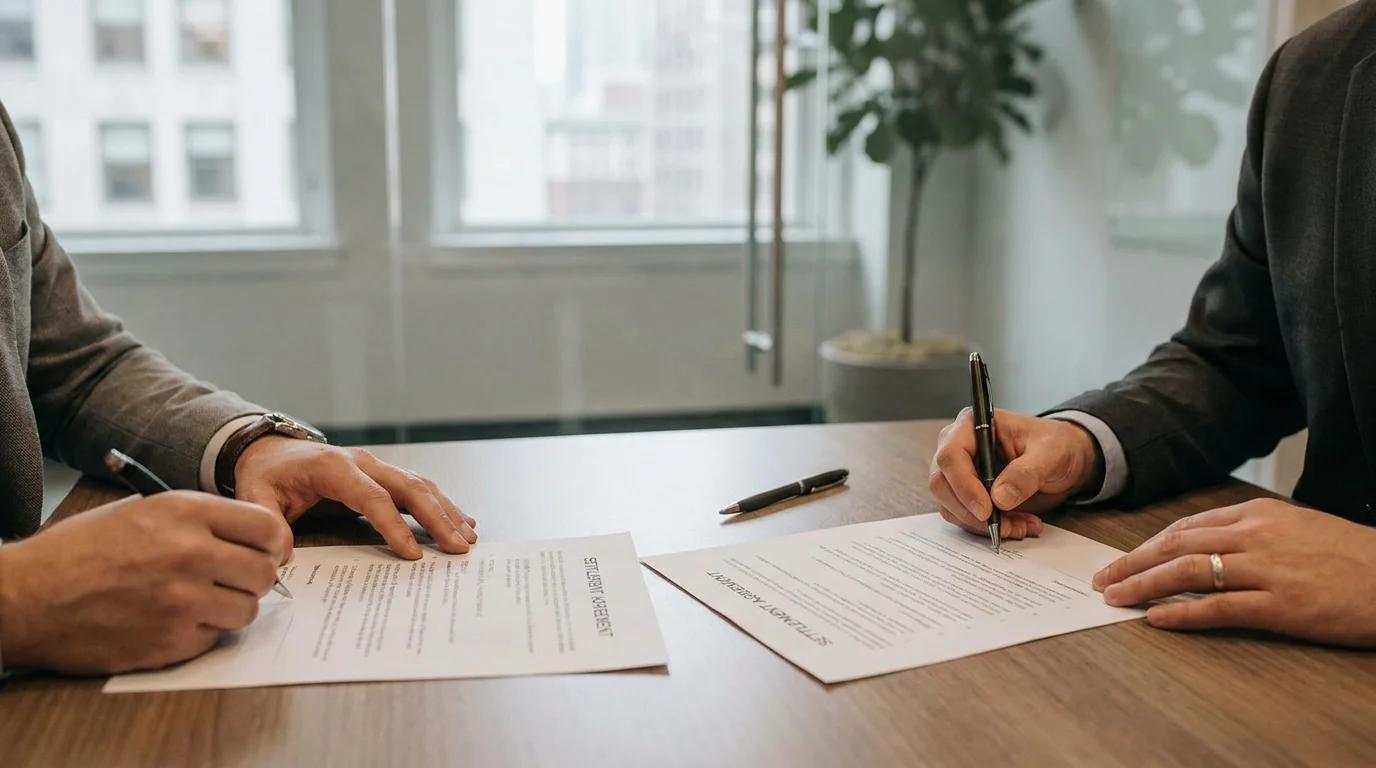
Finalising a negotiated defamation settlement agreement

Finalising settlement terms

Non-disparagement clauses, confidentiality, takedown timing and cost protection are negotiated together. If the other side later refuses a reasonable offer, that record can matter on costs.

Section 20 Apologies and Section 40 Costs: What Settlement Means

Most defamation claims in Australia end in a negotiated defamation settlement rather than a judgment. For a defendant, that is often the better outcome. A matter can be resolved before proceedings are filed, during the pleadings, at mediation, or close to trial. The earlier a sensible offer is put, the more influence it tends to have on costs.

If you have received a concerns notice and want to settle a defamation claim, two legal mechanics do most of the work. The first is the apology. The second is the costs consequence of refusing a reasonable settlement offer. A concerns notice response that sets out your position clearly is usually the starting point.

Apologies under section 20

Under section 20 of the uniform Defamation Acts, an apology does not constitute an admission of fault or liability. It cannot be relied on in later proceedings to establish fault. That protection is useful, but it is not a licence to use careless wording. The words still shape how the publication is understood, whether the other side accepts the apology as resolution, and whether a further complaint follows.

Defamation apology wording is usually negotiated alongside the terms of an offer to make amends. A court may consider whether an apology was made, and how promptly, when it assesses damages and costs. A carefully drafted apology can reduce exposure. A badly drafted one can create it.

Settlement offers and section 40 costs

Section 40 of the uniform Acts allows a court to order indemnity costs against a party who unreasonably refuses a reasonable settlement offer. For defendants, that is the main commercial lever in negotiation. Three instruments are commonly used, and they are not interchangeable.

  • A statutory offer made under the Act carries the specific consequences the legislation provides.
  • A Calderbank offer is a without prejudice offer, save as to costs, that is designed to be shown to the court on the costs question if it is refused.
  • A formal offer of compromise operates under the rules of the relevant court once proceedings have commenced.

Defamation mediation is often the point at which a negotiated defamation settlement is reached in Australia. It gives both sides a structured chance to test their position without a public hearing. The choice of settlement tool depends on the stage of the dispute and the risks in the claim, including any serious harm challenge. In most Australian states and territories, the 2021 reforms require a plaintiff to establish serious harm before a claim can succeed. That question often decides how a settlement should be framed.

Settlement terms in defamation matters usually extend beyond money. They can cover confidentiality, non-disparagement, the timing of a takedown and an agreed public statement. Where a claim is already before the court, settlement strategy is managed alongside a defamation litigation defence so the two do not work against each other. Our defamation defence work is handled Australia wide from a Melbourne office, and initial discussions are confidential.

Settlement and Apology Questions

No. Under section 20 of the uniform Defamation Acts, an apology is not an admission of fault or liability, and it cannot be relied on later to establish fault. The protection applies to the apology itself. The wording still matters, because it affects whether the other side treats the matter as resolved and how a court may view the conduct if the claim continues. Section 20 also sits alongside the offer to make amends process, which has its own rules about content and timing.

Mediation is a structured negotiation, usually with a neutral third party, where the parties try to agree terms. A Calderbank letter is a written offer, marked without prejudice save as to costs, that can be produced to the court on the costs question if it is refused. An offer of compromise is made under the rules of the relevant court and carries its own costs consequences. Each is used at a different stage and each sends a different signal to the other side.

The wording is negotiated. No party can force the other to publish words it has not agreed to, and a plaintiff cannot insist on a specific form of words unless a court orders it. In practice, most apologies and agreed statements are settled between solicitors, sometimes with the assistance of a mediator. We draft wording that answers the complaint without creating a new one. The final text is yours to approve.

Yes. These terms are common in negotiated defamation settlements. Confidentiality can cover the fact of settlement, the amount paid and the correspondence. A non-disparagement clause restricts what each side may publish about the other. A takedown clause sets a date for removal of the material and sometimes for de-indexing. For many defendants, the takedown timing matters more than the sum involved.

The offer does not disappear. If the matter proceeds and the plaintiff does less well than the offer, the court may consider whether the refusal was unreasonable and order indemnity costs under section 40. Indemnity costs are assessed on a more generous basis than ordinary party and party costs. Whether a refusal is treated as unreasonable depends on the offer, its timing and the information available when it was made.

It varies. A straightforward matter resolved before proceedings can conclude in weeks. Where proceedings have commenced, the exchange of evidence and court timetables usually extend the process over months. Mediation can shorten it. The 28 day period for responding to a concerns notice, or for making an offer to make amends, is an early practical deadline, and it is worth taking advice before it passes.

Often, yes. Most settlements are confidential, and many claims end before any hearing, so no judgment or public account of the evidence is created. Where a public statement is unavoidable, its wording and timing can be negotiated. We act for business owners, professionals and public figures where exposure beyond the claim itself is a genuine concern.

Settlement generally costs less than a defended hearing, though no figure applies to every matter. The costs of discovery, expert evidence, counsel and a multi day trial can be substantial on both sides, and costs are usually assessed after the event. A defendant may recover costs in some circumstances, and an unreasonable refusal of a reasonable offer can shift the basis on which costs are assessed. Costs orders always remain at the court's discretion.

Discuss Your Settlement Position Early

A confidential discussion about apology wording, mediation or the right settlement offer can shape the outcome before positions harden.

Defamation litigation defence
Call